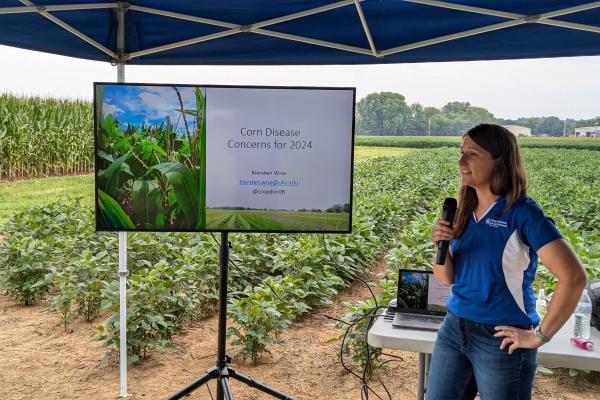
Repeated fungicide use can lead to less effective disease control over time, reducing yields for farmers. A multi-organizational study spearheaded by UK hopes to gain deeper insights into the issue.
On this episode of “Behind the Blue,” we feature Lou Hirsch, assistant professor of plant pathology in the Martin-Gatton College of Agriculture, Food and Environment, presenting the talk "Fungal Feasts: Fungi are all around us — and tasty!”
The University of Kentucky Center for Appalachian Research in Environmental Sciences (UK-CARES) recently welcomed its fourth cohort of Faculty Fellows in Science Communication.
The University of Kentucky Center for Appalachian Research in Environmental Sciences (UK-CARES) honored UK researchers, community leaders and organizations for their work to help Kentuckians in Appalachia.
The University of Kentucky Center for Appalachian Research in Environmental Sciences (UK-CARES) honored UK researchers, community leaders and organizations for their work to help Kentuckians in Appalachia.
The State of the Center’s Science meeting was held in December of 2022, where researchers were recognized for their projects, publications and community engagement.
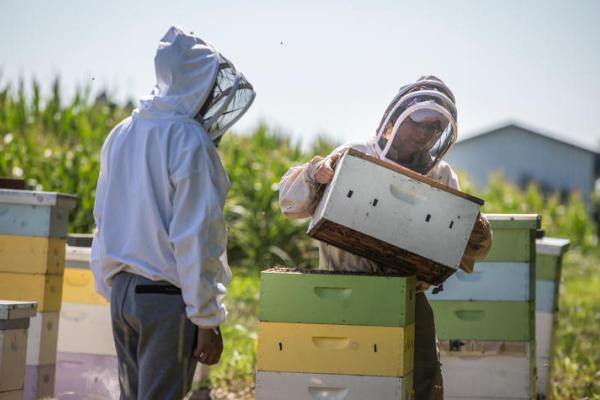
For this "UK at the Half," we talk with Clare Rittschof, associate professor of entomology, about why she has an “open door” policy in her labs for students.
UK‘s Ag Equine Programs and the Kentucky Horse Council are again partnering on the 2022 Kentucky Equine Survey, a statewide comprehensive survey of all horse breeds.
Wayne Sanderson is one of this year’s Great Teacher Award recipients. Sanderson knew at a young age that he had a gift and that he wanted to be a mentor for the next generation.
UK researchers expect this study to give them new knowledge about DBP formation and exposure pathways while building local partnerships and capacity to reduce exposures at a local level.
Nearly all Martin County survey respondents reported problems with their drinking water including odor, appearance, taste and pressure. The UK researchers found 47% of the samples had at least one contaminant that exceeded U.S. EPA regulatory guidelines.