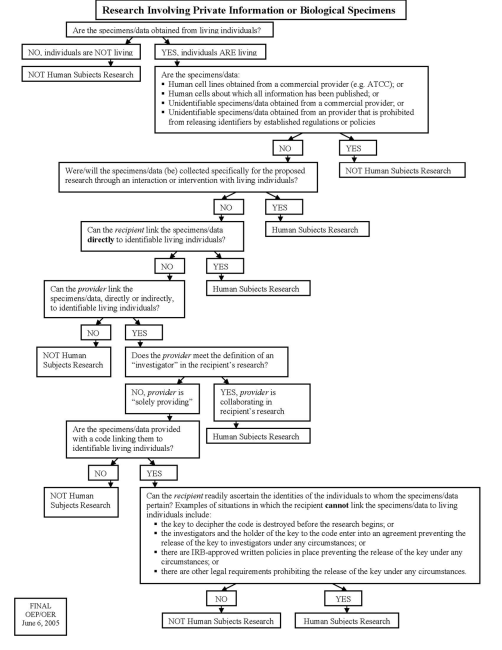
A registry is an organized system that uses observational study methods to collect uniform data (clinical and other) to evaluate specified outcomes for a population defined by a particular disease, condition, or exposure, and that serves a predetermined scientific, clinical, or policy purpose(s). Registries may be based on product surveillance (e.g., drug, device), services, diseases or conditions, or other focus (e.g., women’s health registry). The design, operations, data collected, and plans for use and/or sharing for secondary research determine which regulations apply and the level of IRB review and oversight required.
Before proposing the establishment of a data registry for research, investigators must consider whether the information they plan to collect would be readily available from an already established research registry within the institution (e.g., Center for Clinical and Translational Science Enterprise Data Trusts). Absent scientific justification, the establishment of multiple independent registries collecting duplicate material increases the risk of tracking errors due to variability in practices and creates confusion on behalf of participants.
Before establishing a registry, investigators are encouraged to review the comprehensive guidance provided in the Resources/Reference Section below to consider factors beyond human subject protection (e.g., infrastructure requirements, financial resources, facilities, custodianship, personnel training, intellectual property, etc.).
If the scope of a registry expands, update the IRB protocol and informed consent accordingly. Do not expand the scope of the registry by adding and removing researchers as study personnel. As study personnel, researchers have access to identifiers. Research with identifiable material requires additional protocol-specific IRB review
This page focuses only on issues related to IRB review and human subject protection.