Skip to main
University-wide Navigation

Our Mission for Kentucky and Beyond

Research is of critical importance to our university and the Commonwealth. Fundamental discoveries are happening every day led by talented faculty, students and staff.

Those discoveries translate to new therapies and treatments for patients. They become new products that change the way we live and work. They inform policies and improve the lives of Kentuckians and beyond.

We mentor the next generation of researchers, students who are preparing to enter not just the Kentucky job market, but the global one. We are working together to strengthen the pipeline training students to be creative and resilient thinkers ready to adapt and familiar with emerging technologies.

UK is a special place — talented scientists and scholars working closely and collaboratively across every discipline and all on one campus.

There is a deep commitment here to pursue discovery that improves the health, education and economy of Kentucky. 

And at our core, there is a desire to always serve the best interests of our students and all learners.

There is so much momentum behind those goals and so much opportunity to build and do even more.

Our mission is to Advance Kentucky for all citizens. Our goal is very simple: to make life better for the Commonwealth and beyond.

See UK Research by the numbers


Leading disaster prediction, response

A $20 million award from the National Science Foundation’s Established Program to Stimulate Competitive Research (NSF EPSCoR), “Climate Resilience through Multidisciplinary Big Data Learning, Prediction & Building Response Systems (CLIMBS),” is advancing Kentucky’s climate resiliency, using a collaborative, statewide approach.

With $4 million in additional funding from the Kentucky Cabinet for Economic Development, eight universities are using “big data” approaches and monitoring networks to understand historical data and gather new data, using AI to forecast floods and landslides to bolster response and preparedness efforts, and establishing an enhanced framework for disaster mitigation and community-level response.

“This isn’t simply a five-year project, it is an investment that will live on across Kentucky through improved research infrastructure, new faculty hiring, student support and workforce development,” said Rodney Andrews, KY NSF EPSCoR program director.

Read more: 'UK leading $20 million, 5-year NSF collaborative project to build climate resilience in Kentucky'

CLIMBS%20Collaboration-06.png

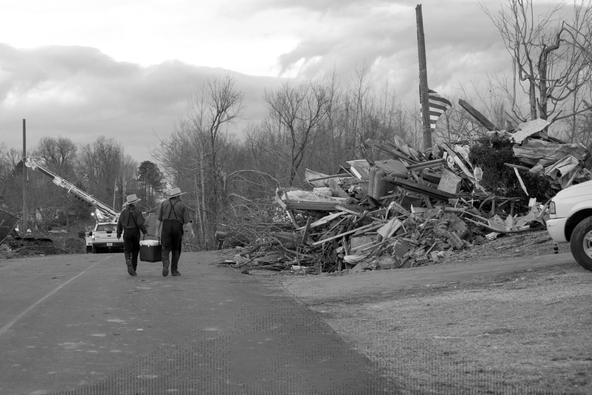
UK leads an eight-institution collaboration with the University of Louisville, Western Kentucky University, Northern Kentucky University, Morehead State University, Eastern Kentucky University, Murray State University and Thomas More University that will address fundamental knowledge gaps in climate-related understanding to help Kentucky communities prepare and respond to disasters.

two people carrying a cooler walk by a mound of debris left after a storm

Balancing mechanics to aid armed forces, jockeys

The Jockey and Equestrian Initiative (JEI) at the Sports Medicine Research Institute (SMRI), launched in 2018, is looking into protocols for concussion testing in jockeys. Now, JEI encompasses a wide range of performance testing, including body composition, flexibility, reaction time, leg and grip strength, and balance.

After testing the individual elements of their performance, the jockeys are covered with tiny electrodes and hop up on Charlie, the SMRI’s mechanical horse. Jockey’ participate in a simulation of racing. A small screen shows instant feedback, like how the rider shifts their weight or pulls the reins.

Research director of the Equestrian Athlete Initiative Kimberly Tumlin (College of Public Health) said the goal is to get a baseline assessment for ideal jockey performance which could help prevent injuries for both horse and rider.

“Unlike the NFL, or other professional sports, jockeys aren’t on a salary — they work for themselves, and they don’t get paid if they don’t ride,” said Michaela Keener (College of Health Sciences, Equestrian Athlete Initiative). “So, we want to protect their health, yes, but also get them back to riding as safely and quickly as we can.”

Read more: 'SMRI researchers to study Air Force health demands with $3.4M grant'

SMRI Researchers received a $3.4 million grant from the Air Force Research Laboratory (AFRL) to study the health demands of special tactics support personnel and create a plan to reduce their risk of job-related injuries. The research, led by Nicholas Heebner (College of Health Sciences), hopes to create information and resources for service members and their health care providers to improve warfighter health, performance and resilience.


Unwrapping history

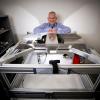
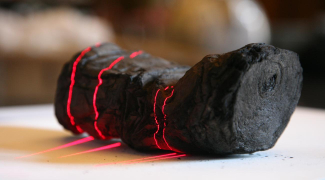
For more than two decades, Brent Seales (Stanley and Karen Pigman College of Engineering) and his Digital Restoration Initiative team have been on a mission to unlock the secrets of the Herculaneum scrolls (damaged by Mt. Vesuvius’s eruption in 79 CE) and other ancient artifacts. His foundational research on virtual unwrapping takes a 3D X-ray from a micro-CT machine and pushes it through a machine learning process to find the ink and flatten the document so it can be read.

We have pursued the dream of reading this extremely challenging material from Herculaneum. We have now proven that it is possible. Overcoming damage incurred during a 2,000-year span is no small challenge. But that’s what researchers do — together, we conquer the seemingly impossible.

Brent Seales at a machine in his lab
Brent Seales
Pigman College of Engineering
an ancient, blackened scroll is being scanned by lasers

In 2015, Seales and his team revealed text from the ancient En-Gedi scroll to be the beginning of the Book of Leviticus. It is believed to be one of the oldest Hebrew biblical texts ever found outside of the Dead Sea Scrolls.

In 2023, Seales (in partnership with EduceLab: A Digital Restoration Initiative, the Library of the Institut de France and founders of the Vesuvius Challenge) hosted a livestream event at UK to read the first text from a Herculaneum scroll. 

In 2025, Seales was awarded a prestigious European Research Council (ERC) Synergy Grant as part of an international team seeking to unlock the secrets of the Herculaneum scrolls.

Seales’s research team is supported by a five-year $14.6 million grant for EduceLab from the U.S. National Science Foundation and a four-year $500,000 grant from the National Endowment for the Humanities.

Read more: 'Beyond the breakthrough: How Brent Seales is pushing the boundaries of discovery through new heritage science lab'


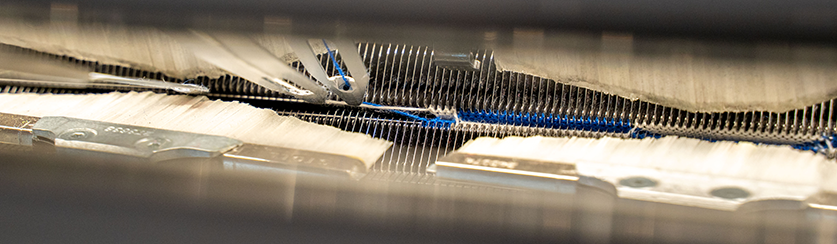
close-up of a digital weaving machine

Digitally Weaving the Textiles of Tomorrow

With support from the Office of the Vice President for Research through the Celebrating University Research Across the Enterprise (CURATE) program in FY25, the SoftLab represents a growing area of innovation within the College of Design. SoftLab draws on faculty research expertise and new approaches to textiles and materials.

The robotic knitting machine plays a central role in this research. Jennifer Meakins (College of Design) uses the machine to develop complex weaved materials and create designs that incorporate wiring for electronic knitwear. Her research centers on craft and textiles, and she teaches through the act of making materials. Her work treats the construction of a textile as a form of design practice, and she approaches knitting as a tool that can support many different disciplines. 

Read More: 'Jennifer Meakins bridges design, material science and education'


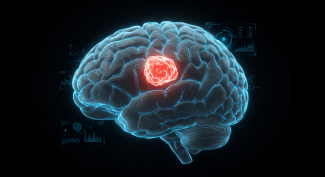
illustration of a brain with a highlighted tumor

Finding biomarkers for brain cancer

With support from the National Cancer Institute, UK Markey Cancer Center researchers discovered a genetic biomarker that could help identify patients with glioblastoma most likely to benefit from the cancer drug bevacizumab.

Brain tumors from patients treated with bevacizumab who lived longer were more likely to have a genetic change called CDK4 amplification. This suggests that testing for the molecular marker could help oncologists identify patients most likely to respond well to bevacizumab treatment.

“The findings could help oncologists make more informed treatment decisions for glioblastoma patients, potentially sparing those unlikely to benefit from unnecessary side effects while ensuring those who might respond get access to the drug,” said John Villano (College of Medicine).

Glioblastoma accounts for about 15% of all brain tumors and is the most aggressive form of brain cancer, with patients typically surviving less than 15 months following diagnosis.

Bevacizumab, one of the medications commonly used to treat recurrent glioblastoma, works by blocking blood vessel growth in tumors. For many patients, its use has been associated with increased progression-free survival and improvement in symptoms and quality of life. However, there has been no way to predict which patients would benefit most from treatment.

Read more: 'Markey researchers identify genetic marker that could guide brain cancer treatment'


dental professionals wearing PPE

Empowering dentists to reduce opioid prescriptions

One of the leading prescribers of opioids to young adults are dentists and oral surgeons. With $1 million from the National Institute of Dental and Craniofacial Research (NIDCR), Marcia Rojas-Ramirez (College of Dentistry), below left, and Doug Oyler (College of Pharmacy) teamed up to implement an intervention strategy with dental providers to reduce the number of opioid prescriptions they write after dental procedures.

Read more: 'UK dentistry, pharmacy researchers partner on opioid alternatives for adolescent pain management'


Spinning carbon from waste

With funding from the Department of Energy, researchers at the UK Center for Applied Energy Research (CAER) are turning Kentucky waste coal into valuable carbon products. 

Kentucky is the seventh-largest coal-producing state. After mining, coal is sent to a preparation plant and readied for shipment. A stream of coal unsuitable for transportation, called waste coal, is produced and stored onsite. More than four billion tons of waste coal are estimated to exist across Kentucky.

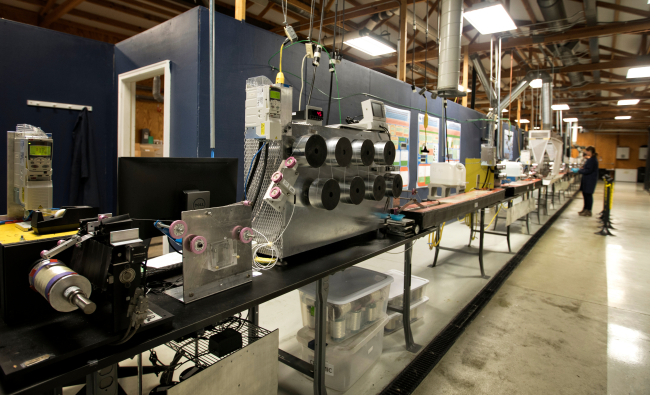
Carbon fiber spin line at CAER
spool closeup

Home to the largest carbon fiber spinline at any academic institution in North America, CAER is a global leader in carbon fiber research. High-value carbon fiber is used in aircraft, automobiles, sporting goods and other high-performance materials. CAER is working toward a cost-competitive, domestic supply chain for carbon fiber and graphite, taking an environmental liability and turning it into a sought-after material.

“Lightweight carbon fiber composites hold such promise across a wide spectrum of manufacturing sectors, and we know carbon fiber is going to play an increasingly important role in advanced manufacturing,” said Matthew Weisenberger (CAER).

Read more: 'UK researchers develop novel method to turn coal waste into carbon fiber'


researchers wearing high-visibility shirts and hardhats in a lab

Using less, getting more

Mining engineer Rick Honaker (Pigman College of Engineering) is developing a more environmentally friendly way of processing coal and then recovering the energy-relevant byproducts.

Honaker is using carbon dioxide emitted near operating mines and processing operations to reduce the energy consumed during grinding by more than 50% while improving the recovery of critical energy-relevant minerals by 20% or more. The ultimate goal of the project is to get more minerals by using less energy and releasing less carbon dioxide.

The Department of Energy funded the project focused on applications involving ore sources of rare earth elements and copper — materials that are essential to modern technologies, clean energy and economic security but vulnerable to supply chain disruptions.

Read more: 'UK researchers are leaders in recovering materials that power our world'


Containing fusion power

UK leads a project with $2.3 million in funding over four years from the U.S. Department of Energy Advanced Research Projects Agency-Energy (ARPA-E) to develop next-generation materials critical to commercializing fusion power.

The award is part of the Creating Hardened And Durable fusion first Wall Incorporating Centralized Knowledge (CHADWICK) program. The goal is to discover or develop a class of first wall materials — materials that form the inner wall of a fusion reactor and contact the plasma — that will maintain performance over the lifetime of a fusion power plant.

The multi-institutional team, led by UK’s John Balk (Pigman College of Engineering), will explore promising alloy design space and manufacturing processes to strengthen that first wall.

This project aims to solve the challenge of containing a plasma at more than 100 million degrees Celsius — essentially a mini-star — in a fusion reactor. 

Equally important is transferring the technology into practice. Currently, no materials exist with that level of endurance that would make fusion power plants commercially viable. 

“This is a great opportunity to solve one of the key challenges in radiation-heavy industries: how to enhance thermal conductivity without sacrificing material strength,” Balk said.

Read more: 'DOE funds UK research on critical materials for commercial fusion energy'


Music, movement and memory

Alaine Reschke-Hernández (College of Fine Arts) leads a team studying a music therapy intervention for people with severe dementia. Her previous research in care facilities revealed layering of musical stimuli, coupled with purposeful activity matched to participants’ cognitive capacity, shows promise in regulating emotion and reducing agitation. The research is supported by the National Institute of Aging Alzheimer’s Disease Research Center at the Sanders-Brown Center on Aging and the team includes co-investigators Erin Abner, Fredrick Schmitt and Linda Van Eldik (Sanders-Brown Center on Aging).

Read more: 'UK researcher helps caregivers navigate Alzheimer's challenges'

elderly people playing instruments

Sanders-Brown Celebrates 40

The Sanders-Brown Center on Aging celebrated its 40th consecutive year of funding as a National Institute on Aging Alzheimer’s Disease Research Center (ADRC) in 2025. It is one of only 37 designated ADRCs in the United States and one of only 9 to be continuously funded. Sanders-Brown investigates the causes of Alzheimer’s disease and related dementia, advances early detection tools and treatments, and trains future scientists. 

“From debunking early myths about what causes dementia to identifying new diseases that mimic Alzheimer’s, our scientists and clinicians have changed what the world knows about the aging brain,” said Linda Van Eldik, Sanders-Brown Center on Aging director. “We couldn’t do what we do without the community.”

Read more: 'UK Sanders-Brown Center on Aging celebrates 40 years as an NIH-funded Alzheimer’s Disease Center'

We’re not yet at a cure. But, mark my words, when that cure comes, Sanders-Brown will have played a vital role in advancing it.

Dr. Greg Jicha
Dr. Greg Jicha
Sanders-Brown Center on Aging
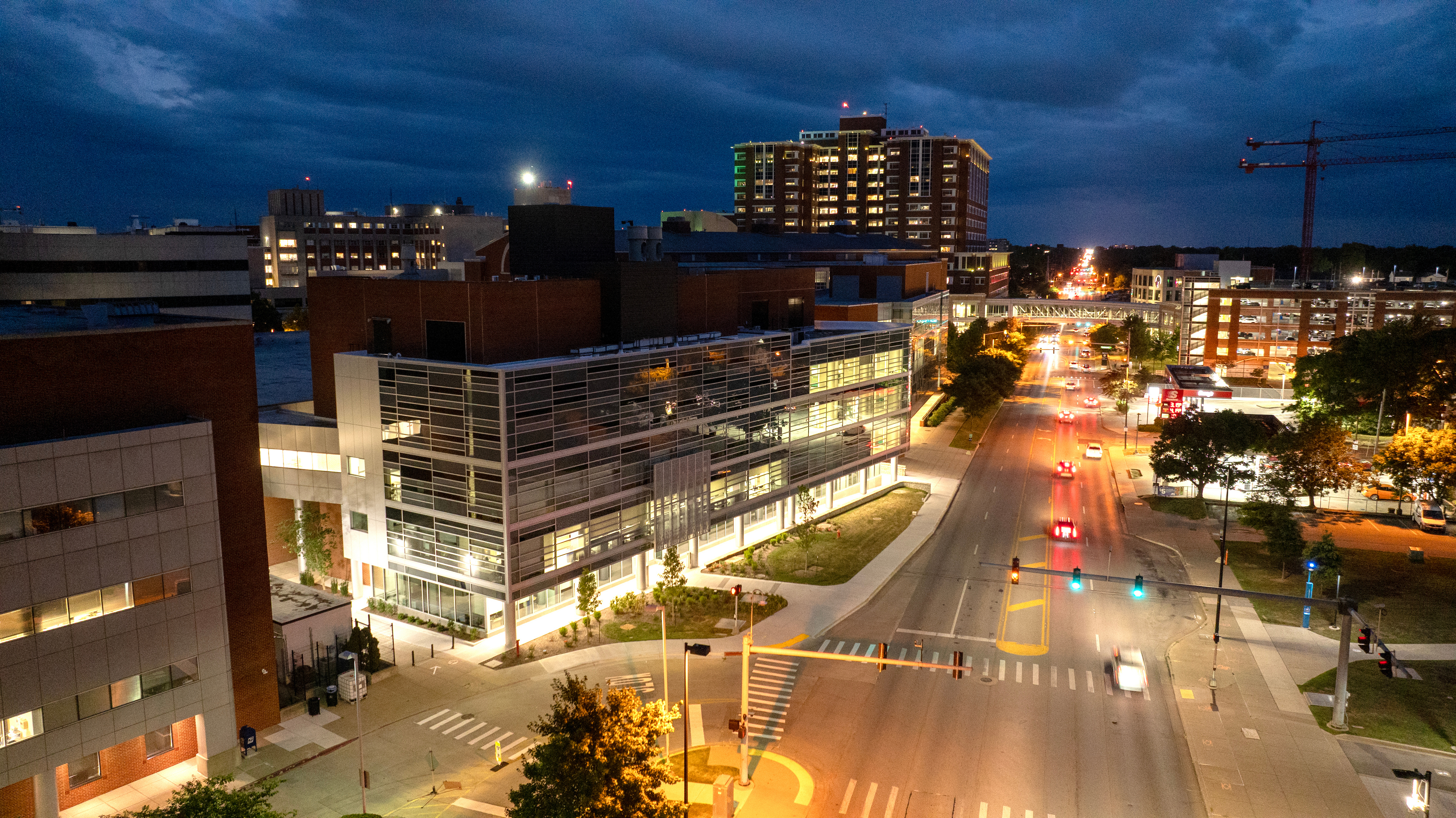
Sanders-Brown Center on Aging at night

The newly renovated Sanders-Brown Center on Aging science and lab building opened in 2025 in Lexington.


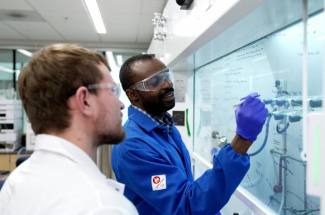
Samuel Awuah and another researcher working in a lab

Fighting cancer with a golden bullet

UK researchers have developed a new class of gold-based compounds that show promise in fighting various types of cancer.

The study, led by Samuel Awuah (College of Arts and Sciences, Markey Cancer Center) showed that the compounds could kill cancer cells by disrupting their energy production.

The new compounds work by targeting and shutting down mitochondria, which generate energy for cells. In lab tests, they were effective against several types of cancer cells, including those from breast, ovarian and lung tumors.

The study builds on research that shows auranofin — a gold-based drug approved by the FDA in 1985 for treating rheumatoid arthritis — has potential as a cancer therapy.

The research team designed the new compound to be more stable in the body through a chemical process they refer to as “stapling.” This method joins gold molecules to other chemical structures in ways that help them resist breaking down inside cells. 

Awuah’s work is part of an $11.2 million Centers of Biomedical Research Excellence (COBRE) grant from the National Institutes of Health.

Read more: 'UK research team develops new compound with cancer-fighting properties'

By creating compounds that remain stable in the body and specifically target cancer cells’ energy source, this opens the doors for the development of new and more effective treatments.

Samuel Awuah
College of Arts and Sciences

Rebuilding rural research

The University of Kentucky Research and Education Center in Princeton, Ky., has done a century of research.

The focal point for the Martin-Gatton College of Agriculture, Food and Environment’s work in Princeton, the center’s research has shaped farming practices with landmark contributions to no-till farming, double-crop systems, integrated pest management and soil reclamation. Its work in dark-fire tobacco, fruit production, beef cattle nutrition and forage systems has helped Kentucky producers.

The center, which is nearly 1,600 acres, lost almost all of its facilities and research-grade equipment in a 2021 tornado. Despite the destruction, more than 200 research projects continue, and all buildings are expected to be completed by 2026.

Read more: '100 years of innovation and service: UK Research and Education Center celebrates impact, resilience'


Faculty Recognition

Fellows

  • The National Academy of Inventors named Dibakar Bhattacharyya (Pigman College of Engineering) a Fellow. 
  • The American Psychological Association named Cassandra Gipson-Reichardt (College of Medicine) a Fellow. 
  • The American Statistical Association named David Fardo (College of Public Health) a Fellow. 
  • The American Phytopathological Society named Paul Vincelli (Martin-Gatton CAFE) a Fellow. 
  • The American Association for Cancer Education (AACE) named Nathan Vanderford (Markey Cancer Center) a Fellow.

NSF Career Awards

  • Xu Jinn (Stanley and Karen Pigman College of Engineering)
  • Alexandra “Zan” Paterson (Pigman College of Engineering)
  • Diana Byrne (Pigman College of Engineering)
  • Xin Liang (Pigman College of Engineering)
  • Yang Xiao (Pigman College of Engineering)
  • Biyun Xie (Pigman College of Engineering)
  • Ishan Thakkar (Pigman College of Engineering)
  • Christopher Shepard (Martin-Gatton College of Agriculture, Food and Environment)

Honors

  • Matthew Bush (College of Medicine) received the Presidential Early Career Award for Scientists and Engineers (PECASE) from NSF. 
  • David Hardesty (Gatton College of Business and Economics) received a Lifetime Achievement Award from the American Marketing Association. 
  • Gary Ferland (College of Arts and Sciences) received the Catherine Wolfe Bruce Gold Medal from the Astronomical Society of the Pacific. 
  • Frank X Walker (College of Arts and Sciences) received the PEN/Voelcker Award for Poetry from PEN America.
  • Lisa Cassis (College of Medicine, former Vice President for Research) received the Robert R. Ruffolo Career Achievement Award in Pharmacology from the American Society for Pharmacology and Experimental Therapeutics.


Research by the Numbers

$496.9 Million

in external grants and contracts awarded in FY25

$255.3 Million

Federal agency awards in FY25

$542.3 million

spent to carry out R&D in FY25

$1.02 billion

economic impact of UK R&D for Kentucky in FY25

5,146 jobs

created by UK R&D in Kentucky in FY25

2,376 jobs

directly supported by UK Research in FY24

$2.2 million

license income

154 patent applications filed

61 new patents

issued worldwide

1,898 active research awards

2,867 scholarly publications