Preeminent US history journal features UK professor’s essay
In a new essay, a University of Kentucky historian examines how confronting past choices in scholarship can redirect a scholar’s path and cultivate insight. The essay appeared in a September 2025 special issue of the American Historical Review titled “Mistakes I Have Made.”
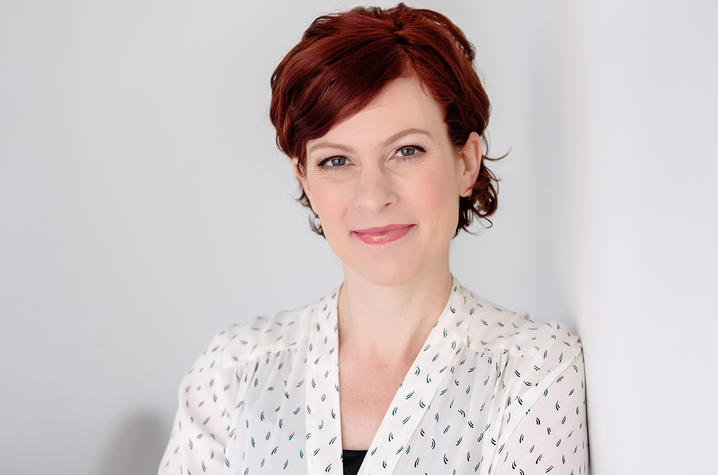
Claire D. Clark, Ph.D., is a tenured Chellgren Endowed Associate Professor of Behavioral Science in the College of Medicine. She also holds a joint appointment in the Department of History in the College of Arts and Sciences. A historian of medicine, she seeks to understand how the lessons learned from medicine’s past can be pragmatically applied to situations we face today.
Clark published her first book, “The Recovery Revolution: The Battle over Addiction Treatment in the United States,” in 2017. The book explored the history of Synanon, a controversial California cult that began as an addiction recovery group. The group’s model was lauded for its promising results in addiction recovery and went on to influence future treatment programs.
Clark’s interest in studying Synanon arose after she received medical treatment for an eating disorder and subsequent peer support in 12-step groups. While many books had been written about recovery for general audiences, she found there was a dearth of academic research on the history of addiction recovery programs and their therapeutic models.
“Early in my career, I would not disclose my personal reasons for being interested in what I study, but I’ve gone through an experience that I describe in the essay,” Clark said. “It’s something I’m ready to own. I'm a person in recovery, and in my late teens and early 20s, I struggled with an eating disorder.”
In her new essay, “The Battles over Addiction Treatment,” Clark examines her recovery experience, the reception of her first book and how one reader’s aggressive response to the book altered her direction as a scholar. The experience ultimately led to a more thorough understanding of what it means to live the dual roles of both a participant in therapeutic culture and a researcher of its history.
The “Mistakes I Have Made” special issue departs from traditional academic form, setting aside the objective nature of historical scholarship to present first-person accounts. Clark said she hopes historians, particularly those early in their careers, who read the “Mistakes I Have Made” special issue will benefit from the insights in the candid reflections.
“Being a historian requires almost radical humility, because you’ve got to be ready to be proven totally wrong, and the base of evidence you’re working from is always incomplete,” Clark said. “It’s always going to change. New sources will be discovered, the context is going to change, and so will people’s perceptions — yours included. The lens through which people will read your work will shift with time.”
Currently, Clark is co-chair of the Therapeutic Communities Collecting Project, which seeks materials that record the institutional histories, legal battles and resident experiences of therapeutic communities across the United States from the 1970s to the present. The project is co-chaired by Doug Boyd, director of the Louie B. Nunn Center for Oral History, and Megan Mummey, director of manuscript collections at the University of Kentucky Libraries, Special Collections Research Center.
“UK Libraries always strives to support faculty research through our archival collecting,” Mummey said. “The Therapeutic Communities collections contain unique primary source materials documenting addiction treatment and are vital for understanding how addiction treatment impacts both individual and social history in addition to medical history. It is the nature of primary sources to be ephemeral. If society does not take active steps to preserve current and past events then we will lose our history. The Therapeutic Community Collecting Project is taking this step to identify, preserve, and provide equitable access to these materials to stave off this inevitable loss.”
Clark is also a 2025 Michael E. DeBakey Fellow in the History of Medicine at the National Library of Medicine. The fellowship supports her research project on addiction treatment before and after the Narcotic Addict Rehabilitation Act of 1966 at the U.S. Public Health Service Hospital in Lexington, an article-length extension of her previous research for the book.
Thomas Kelly, Ph.D., the Robert Straus Professor and Chair of the Department of Behavioral Science in the College of Medicine, supported this step in Clark’s career.
“Dr. Clark’s scholarly work addresses an important gap in the field by examining the developmental trajectory of the Therapeutic Community intervention model beyond Synanon,” he said. “Her work will survive the test of time and be recognized as an important contribution to the field.”
The American Historical Review, published by Oxford University Press on behalf of the American Historical Association, has been the journal of record for the historical profession in the United States since 1895. It is the only journal that brings together scholarship from every major field of historical study. The “Mistakes I Have Made” special issue is co-edited by historians Kate Brown, of the Massachusetts Institute of Technology, and Emily Callaci, of the University of Wisconsin, Madison.