Kentucky Forest Health Conference returns to Lexington Feb. 17
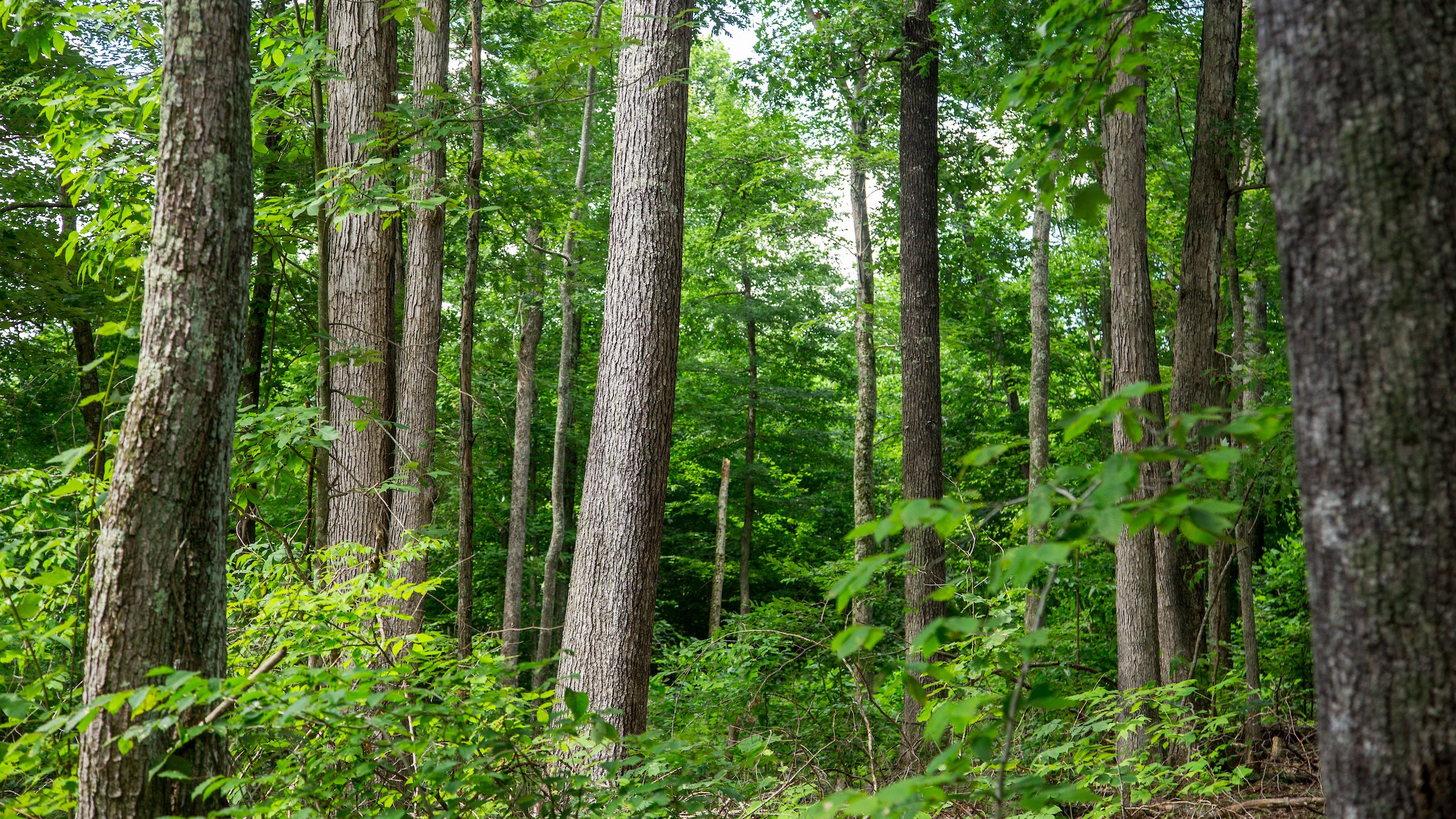
A walk through a Kentucky woodlot can look the same year after year; however, changes could be taking place. A patch of understory gets crowded out. Leaves thin earlier than usual. Bark shows fresh scars.
Sometimes the cause is obvious. Other times it’s a mix of insects, disease and plant competition that takes seasons to show its hand.
“The mix of threats to Kentucky’s forests is the reason foresters, woodland owners and land managers from across the state gather each winter to compare notes, trade lessons and hear what researchers and field specialists are seeing,” said Ellen Crocker, Forest Health Extension associate professor. “The conference is designed to serve a wide audience, from private woodland owners trying to protect a family tract to agency to industry professionals managing larger acreages.”
The Kentucky Forest Health Conference, hosted by the University of Kentucky Martin-Gatton College of Agriculture, Food and Environment, is set for Tuesday, Feb. 17, 2026, from 8:30 a.m. to 3 p.m. ET at the Longship Club inside Kroger Stadium in Lexington.
The conference will provide a practical update on current issues and potential threats and includes speakers from around the Commonwealth. The agenda is built around the latest news on what's spreading and what's slowing down, which control options are working, and what questions still require answers.
This year’s program will cover deer browse problems, invasive plants, insect and disease issues and new research to manage threats, along with related forest health concerns that influence timber value, habitat quality and long-term management plans.
“In Kentucky, those topics often overlap,” Crocker said. “An invasive plant problem can change light levels and soil moisture. A stressed stand can be more vulnerable to disease. A pest outbreak can leave openings that unwanted vegetation quickly fills. For landowners and professionals making decisions now such as what to cut, what to treat, what to replant, what to watch, the most useful information is often the kind that comes from comparing patterns across counties and seasons.”
Registration costs $65 per attendee, including a meal. Because meal planning depends on the registration count, payment at the event will not be available. Credit card payment is preferred.
For groups, UK staff can handle registration without requiring each attendee to complete a separate payment. Those needing group registration, or anyone who needs to discuss other payment methods, can call Reneé Williams at 859-257-7597. Questions about the event may also be sent to forestry.extension@uky.edu.
“For Kentucky’s forests, the stakes behind a day like this are straightforward,” Crocker said. “Trees live on a longer clock than most management decisions, and small problems can become expensive ones if they’re missed early. A single season of good information such as what’s moving into the region, what symptoms to look for and what treatments are worth the cost can change what a forest looks like years down the road.”
For more information about the 2026 Kentucky Forest Health Conference, visit https://forestry.mgcafe.uky.edu/fhc-conference.