UK researcher to study alcohol abstinence with independent NIH grant
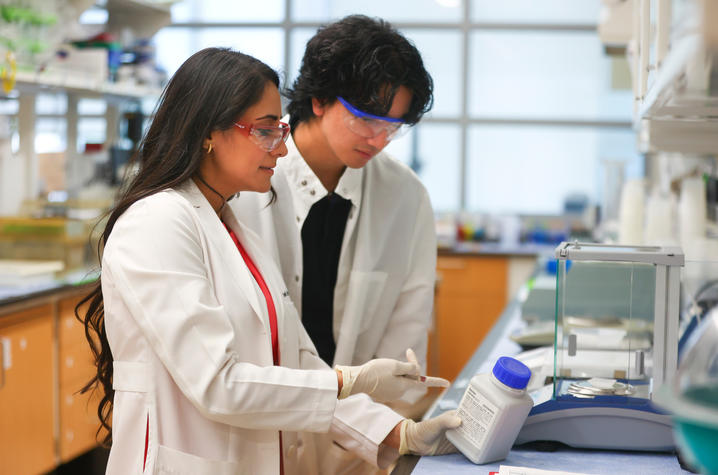
Anel Jaramillo, Ph.D., an assistant professor in the University of Kentucky College of Pharmacy and an Ignite Scholar in the COBRE for Translational Chemical Biology (CTCB), has been awarded her first R01 grant from the National Institutes of Health (NIH).
An R01 grant signifies that a researcher can compete nationally and manage their own independent research program. The grant will allow Jaramillo to explore how specific brain chemical pathways drive anxiety and stress during alcohol abstinence, with a special focus on sex-specific differences that could inform the development of new targeted treatments for alcohol use disorder.
“Anel is an outstanding junior faculty member,” said Jon S. Thorson, Ph.D., associate dean of research and chief scientific officer at the UK College of Pharmacy. “Receiving her first R01 is a big milestone, and her work addresses a critical public health need.”
Abstinence
For millions of individuals living with alcohol use disorder, deciding to stop drinking is only the first step in a complex recovery journey. The period immediately following alcohol cessation — known as abstinence — often triggers severe disturbances, including heightened anxiety, restlessness and deep psychological stress. These distressing emotional states frequently push individuals back toward alcohol consumption, causing relapse.
In designing her research program, Jaramillo sought to target this exact vulnerability.
“I’ve always looked at alcohol and the effects of it on the brain,” Jaramillo said. “I became interested in the period of abstinence, because that really is the key ideal outcome for a lot of people — to be able to stop drinking completely.”
Through conversations with clinical researchers and patient communities, Jaramillo identified emotional distress as the primary roadblock to long-term sobriety.
“Alleviating anxiety and decreasing stress were some of the main things that a lot of people said would make their abstinence easier,” Jaramillo explained. “When people try to quit, they want to feel normal again. If we can help ease that transition, staying sober becomes far more achievable.”
Sex differences
Historically, addiction research focused predominantly on male biology, partly because men historically exhibited higher prevalence rates of alcohol use disorder. However, modern clinical and preclinical data reveal stark biological differences in how male and female brains experience stress, anxiety and alcohol abstinence.
Female patients often experience what researchers call the “telescoping effect.” While women may begin drinking later or in smaller quantities initially, the timeline between regular alcohol consumption and the onset of severe alcohol use disorder is significantly accelerated compared to men. Furthermore, women in abstinence report higher rates of stress-induced cravings and emotional disturbance.
“In humans, females seem to be more affected by these emotional states,” Jaramillo said. “In the preclinical model that we use in our lab, we see that females tend to drink significantly more before and after abstinence. This research will help us understand why these sex differences occur at the molecular level and how we can tailor therapies specifically for women and men.”
The anxiety hub
To uncover the biological mechanisms behind these differences, Jaramillo’s laboratory focuses on a specific neuropeptide known as pituitary adenylate cyclase-activating peptide, commonly abbreviated as PACAP (pronounced “pah-cap”).
In human clinical studies, genetic variations in the PACAP receptor and altered PACAP levels have been directly linked to PTSD and problematic drinking in females, proving that PACAP signaling can be severely dysregulated in stress-related conditions.
Jaramillo’s research zeros in on a brain region called the bed nucleus of the stria terminalis, or BNST. Acting as a central “anxiety hub” in the brain, the BNST integrates stress signals and regulates alcohol-seeking behavior. Nerve fibers originating in the parabrachial nucleus (PBN) deliver a dense network of PACAP-releasing signals into the BNST.
Using preclinical models, Jaramillo’s team will map how PBN-to-BNST PACAP projections alter brain cell communication during abstinence. Her team will do this in three ways: by evaluating neuronal activity during abstinence, observing stress responses in real time, and using targeted neural inhibition to block PACAP signaling.
“Our goal is to temporarily inhibit the neurons that release this peptide during abstinence,” Jaramillo said. “We hope to see that blocking PACAP signaling decreases anxiety in animal models and significantly reduces alcohol intake during post-abstinence relapse tests.”
GLP-1 connection
Jaramillo’s innovative approach also taps into one of the most promising frontiers in modern medicine: peptide therapeutics. PACAP belongs to the exact same family of signaling peptides as glucagon-like peptide-1, or GLP-1 — the target mechanism behind revolutionary metabolic medications like semaglutide.
While GLP-1 medications have gained attention for reducing appetite and quieting “food noise,” researchers are beginning to explore whether similar peptide pathways can quiet “alcohol noise” in the brain.
Interestingly, PACAP pathways have already been targeted in human clinical trials for treating chronic migraines, demonstrating that therapies targeting PACAP receptors are safe and viable in humans.
“Migraine research brought PACAP onto the medical horizon as a viable target,” Jaramillo noted. “Now, we are thinking about it in a new way and working to repurpose that knowledge for substance use disorders. Because PACAP is so deeply involved in stress and anxiety — which are core drivers across many addiction types — this work could unlock brand new therapeutic options.”
Kentucky impact
The potential impact of Jaramillo’s work hits close to home in Kentucky. While public health initiatives across the Commonwealth have heavily targeted the opioid crisis in recent years, alcohol use disorder remains a pervasive, yet frequently overlooked, challenge.
Because alcohol is legal, culturally normalized and widely accessible, many individuals suffering from alcohol use disorder delay seeking help or face quiet disapproval in their daily lives, workplaces and college campuses. Beyond personal suffering, alcohol misuse carries severe economic consequences across Kentucky through lost productivity, workplace absences, alcohol-related accidents and family trauma.
Jaramillo hopes her research will provide both scientific progress and public encouragement.
“Alcohol use disorder affects so many Kentuckians, but because alcohol is so socially accepted, it can sometimes feel like a forgotten disorder compared to opioids,” Jaramillo said. “We want the public and our local communities to know that we haven’t forgotten about them. This disorder is very much still prevalent, and our team at UK is actively working every day to find better solutions that can offer hope.”
Research reported in this publication was supported by the National Institute of General Medical Sciences of the National Institutes of Health under Award Number P20GM130456 and the National Institute on Alcohol Abuse and Alcoholism under Award Number R01AA032581. The content is solely the responsibility of the authors and does not necessarily represent the official views of the National Institutes of Health.