Biosystems and agricultural engineering Ph.D. student selected as Foundation for Food & Agriculture Research (FFAR) Fellow
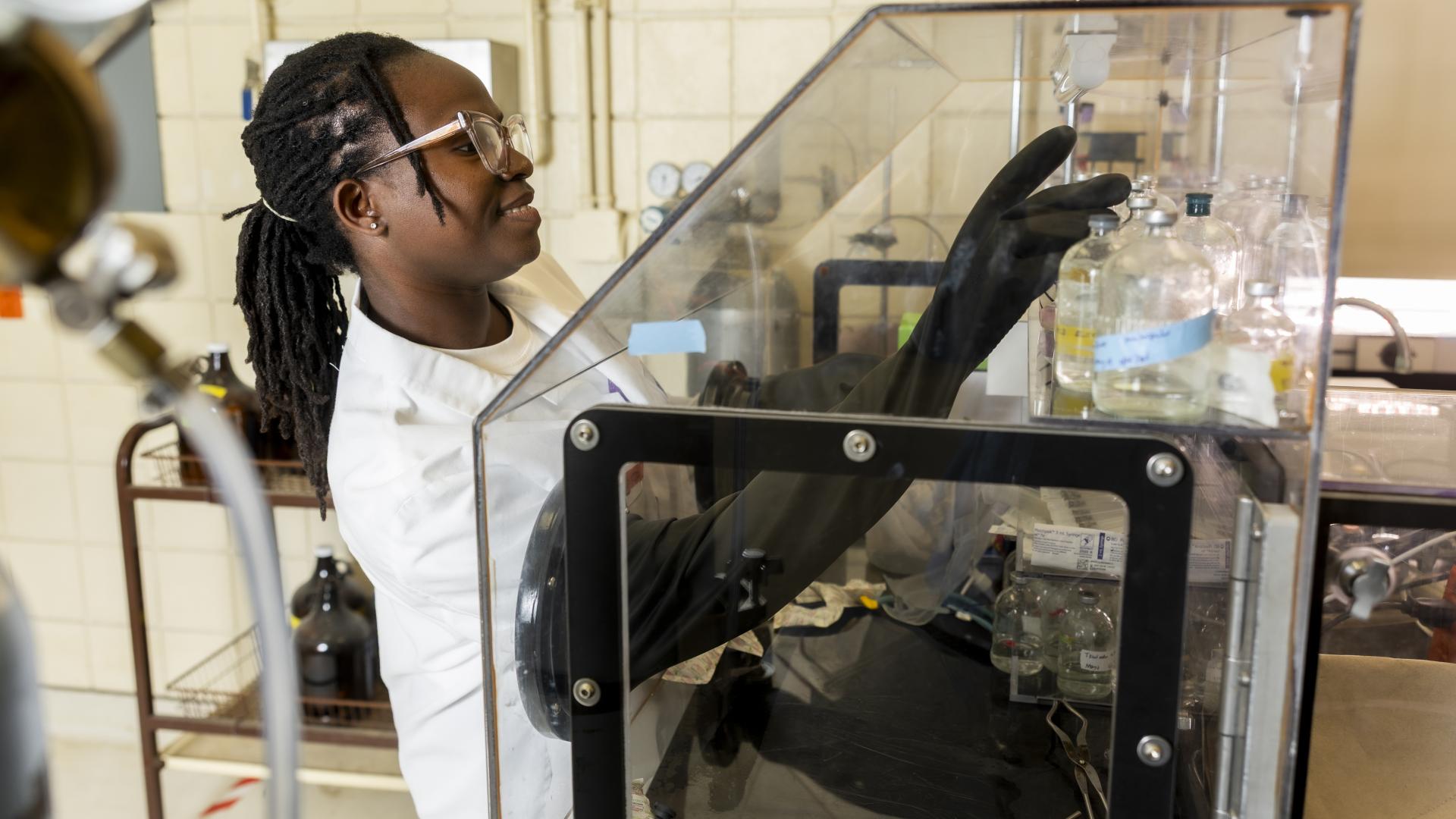
Mary Akingbasote applied to a University of Kentucky Ph.D. program for one reason — research. While she was studying engineering at Penn State, she came across an article about the Barzee Bioprocessing Laboratory.
This is Tyler Barzee’s lab, assistant professor in the Department of Biosystems and Agricultural Engineering (BAE) at the UK Martin-Gatton College of Agriculture, Food and Environment. His lab’s research has three main focuses: modeling bioprocessing for novel food product development, upgrading bioproducts and nutrient cycling, and life cycle assessment and techno-economic analysis. Akingbasote was interested in Barzee’s lab because it focuses on her research topic: how humans can generate something useful from waste.
Growing up on a poultry farm in Nigeria sparked Akingbasote's first agricultural inquiry: What if there was no need for a waste company to clean up after their chickens, and how could her family find a source of income in the process? She was inspired to pursue her undergraduate degree in agriculture.
“It was my father’s farm that made me think about waste and how to use waste better,” Akingbasote said.
After receiving her degree, Akingbasote came to the U.S. and studied agricultural and biosystems engineering at Penn State University. While there, she came across Barzee’s research and reached out to him, which led to her attending a UK BAE recruitment visit.
“A couple of things about Mary stood out,” Barzee said. “First, she has a passion for agricultural sustainability and renewable energy (especially anaerobic digestion) that is based largely on her experience growing up in Nigeria on her father’s farm. Second, I was impressed with Mary’s experience with publishing Extension articles and giving presentations. This definitely signaled that Mary was capable in not only getting the science done but also communicating the value of those results to her stakeholders.”
Since coming to UK to pursue her Ph.D., Akingbasote has been selected as a 2026-2029 Foundation for Food and Agriculture Research Fellow. As a fellow, she will receive professional development and career guidance with graduate level professionals from across the country.
“The goal of the program is for us to have both the research skills and the soft skills to thrive in our workplace,” Akingbasote said. “I’ve met some of the current and past fellows at conferences and it gives us a sense of community. I feel I could reach out to them for guidance or mentorship.”
The current group of fellows meets each month for a new training. They will also begin to share their research with one another, which Akingbasote noted the group’s research focuses are diverse. She looks forward to learning about areas she has yet to explore.
“Mary’s research explores using waste gases from Kentucky’s bourbon industry to create platform chemicals that can support sustainable biomanufacturing in rural areas across the state,” Barzee said. “I am inspired by Mary’s passion for upgrading agricultural wastes and also her self-driven attitude to work as hard as she can to realize her goals and dreams.”
Akingbasote is still early in her Ph.D. program and is keeping her options for her future open. The FFAR fellowship has programming to help candidates determine whether they want to step into a workforce or continue working in research and academia. She looks forward to making that choice when she is prepared.
Read more about the Barzee Lab or the FFAR Fellowship here.