Markey physician leads new international guidance on bladder cancer biomarkers
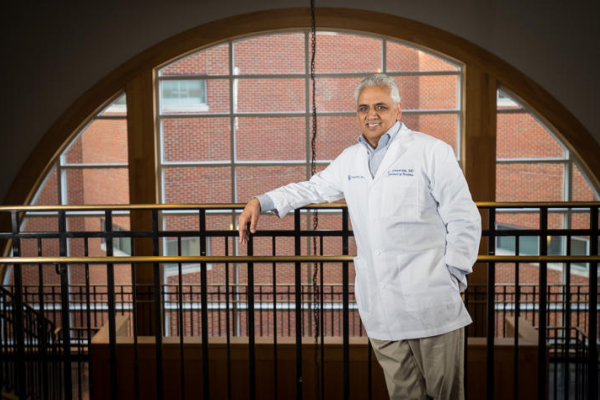
University of Kentucky Markey Cancer Center physician and researcher Patrick Hensley, M.D., led an international, multidisciplinary team of bladder cancer experts in the development of new recommendations designed to help clinicians determine when biomarker testing can meaningfully guide bladder cancer care.
The consensus statements from the International Bladder Cancer Group (IBCG), published in Nature Reviews Urology, provides guidance on the use of biomarkers across different stages of bladder cancer, from evaluating patients with blood in the urine to treating advanced disease.
On average, more than 1,200 Kentuckians are diagnosed with bladder cancer each year. As bladder cancer care evolves, some biomarkers are beginning to help physicians tailor treatment decisions for certain patients, while others remain under study.
Biomarkers are measurable characteristics — such as genetic changes in a tumor or tumor-related genetic material found in the blood — that can provide information about a person’s cancer. The panel explores the use of circulating tumor DNA (ctDNA), fragments of tumor-specific DNA that is detectable in the blood stream, that can provide important information about a patient's risk of recurrence and may help identify patients who could benefit from alternative treatment strategies. For patients with locally advanced or metastatic bladder cancer, the group also recommends testing for certain FGFR3 genetic alterations and HER2 protein expression, which can help identify patients who may be candidates for treatments targeting those tumor characteristics.
The recommendations also highlight some gaps in the evidence. Because biomarker testing is developing rapidly and many tests are becoming commercially available, clinicians need clear guidance about which tests are supported by evidence and how to use them in practice.
“The goal is to get closer to choosing the right treatment for the right patient at the right time,” said Hensley, an assistant professor in the Division of Urologic Oncology in the UK College of Medicine. “Biomarkers have tremendous potential to help us do that, but we also need to be clear about which tests are ready to guide care today and which still require more research.”