Q&A: Understanding the rise of online sports betting
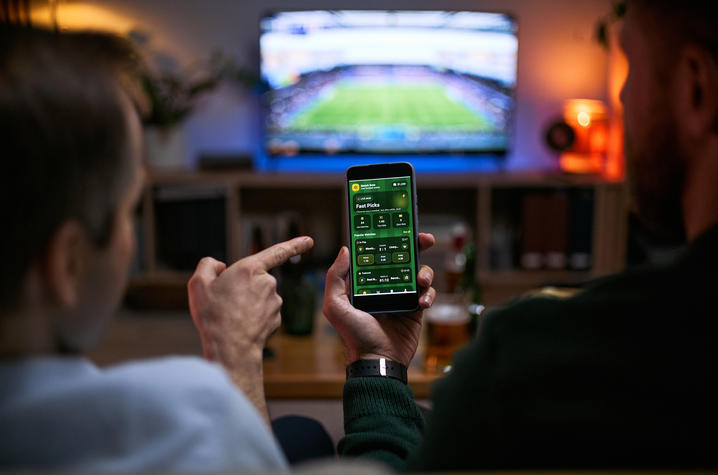
Online sports betting has transformed from a niche activity into a multibillion-dollar industry — now woven into the fabric of American sports culture.
From professional football and basketball to international events like the FIFA World Cup, betting odds, promotions and real-time wagering opportunities are only a tap away.
As gambling access has expanded, so have questions about its impact.
Glenn Sterner III, a faculty member in the University of Kentucky College of Social Work, studies the effects of online gambling and sports betting. In the Q&A below, he explains the forces driving the industry's growth and what consumers should know about responsible betting.
UKNow: Sports betting seems more visible than ever. What has driven the rapid growth of online sports betting in recent years?
Sterner III: We have certainly seen the legalization of gambling — including sports betting — shift in the U.S. in recent years.
This is a direct result of the 2018 Supreme Court case and decision, Murphy v. National Collegiate Athletic Association, which deemed the Professional and Amateur Sports Protection Act (PASPA) of 1992 unconstitutional. PASPA previously outlawed sports betting outside of the state of Nevada. This allowed states to control the legality of sports betting, including online sports betting.
Companies now have the ability to target consumers in states where sports betting and online gambling is legal, as well as lobby for the legalization of sports betting and online gambling within other states.
The American Gaming Association reports that as of February 2025, eight states have legalized online gambling/casinos and 39 states/DC have legalized sports betting (of which 33 allow sports betting online).
UKNow: Events like the FIFA World Cup, Super Bowl and March Madness often come with a flood of betting advertisements. How do major sporting events influence betting behavior?
Sterner III: With the growth of legalization of sports betting — and the accessibility of online sports betting — companies are seeking more ways to capitalize on major sports events to increase revenues.
Remember, these are companies hoping to make a profit, and the more they can utilize collective enthusiasm to drive activity, whether in person or online, the more money they can make.
While wagering has long been associated with major sporting events, the scope of sports betting has expanded dramatically. Today, consumers can bet not only on the outcome of a game but also on specific moments as they unfold through microbetting — such as predicting the next pitch or play in real time. As sports betting becomes more widely legalized and offers increasingly interactive ways to participate, betting companies are leveraging aggressive advertising campaigns, particularly around high-profile events like the FIFA World Cup, to attract and retain customers.
Digital access and consumer behavior
UKNow: What makes online sports betting different from traditional gambling, and how does 24/7 access affect betting habits?
Sterner III: The biggest difference online sports betting has from traditional gambling is that it is easier to hide. You might have no idea that your friend or loved one is placing numerous bets right beside you, because they can do so on their phone with little awareness.
Additionally, online gambling allows people to gamble in isolation, making it even more difficult for problematic behaviors to be recognized. As a result, the widespread availability of online sports betting and other forms of internet-based gambling — accessible from virtually anywhere with an internet connection — presents significant challenges for identifying both emerging and existing gambling disordered behaviors.
UKNow: How have sports betting partnerships, advertising campaigns and social media changed the public's perception of gambling? And how has it influenced consumer behavior?
Sterner III: Advertising spending on sports betting and online gambling continues to grow at a rapid pace year after year. While TV, radio and other traditional media remain important channels, marketing has increasingly shifted to paid sponsorships with social media influencers and livestream creators on platforms such as Twitch, Kik and others. These strategies appear to be effective, as sports betting and online gambling revenue in the U.S. continues to increase annually.
Our greatest concern is the exposure of young people to messaging that normalizes gambling through both traditional advertisements and more subtle forms of promotion, such as social media posts with limited disclosure. Research continues to show that online sports betting is especially popular among young men. As a result, policymakers should carefully consider how this constant exposure shapes young people's attitudes toward gambling and gambling-like behaviors.
Public health and risks
UKNow: What does current research tell us about the connection between online gambling and broader public health concerns?
Sterner III: The greatest concern we see is that as access increases to online gambling, we see an increase in disordered gambling behaviors and diagnoses. We also see more individuals reaching out for assistance using problem gambling services, such as 1-800-GAMBLER.
There is a need for greater investment in prevention programs, public awareness campaigns and access to treatment for people experiencing disordered gambling. The earlier individuals receive support, the greater the opportunity to reduce harm and prevent the long-term consequences of disoredered gambling.
UKNow: What are some of the warning signs that casual betting may be becoming problematic?
Sterner III: Several validated screening tools are used to assess disordered gambling behaviors. These tools identify behaviors that may signal someone should take a closer look at their gambling habits or seek an evaluation for a potential gambling disorder. Warning signs include gambling more frequently or with larger amounts of money, trying to win back losses by continuing to gamble, being unable to cut back or stop gambling, becoming preoccupied with gambling or feeling compelled to gamble.
The consequences of gambling also can be important indicators. Financial strain, emotional distress, relationship difficulties, health problems, work or school issues, and illegal activity related to gambling may all be signs that someone is experiencing disordered gambling behaviors.
However, having one or two of these warning signs does not necessarily mean someone has a gambling disorder. Screening tools use established thresholds to determine when behaviors may indicate a need for further evaluation.
If you notice these signs in yourself, a loved one or a friend, consider talking with a trusted person or a qualified professional to determine whether additional support may be helpful. It's also important to remember that most people gamble recreationally without experiencing problems. Only a small percentage develop disordered gambling.
UKNow: Are certain groups, such as young adults, more vulnerable to gambling-related harms? If so, why?
Sterner III: We see young men, in particular, are more engaged in online gambling and sports betting — raising concerns that this population may be more at risk for problematic and disordered gambling. However, it is those who engage in mixed-modal gambling — both online and offline (in person at a casino, for example) — that have the highest risk of problematic behaviors.
Research and solutions
UKNow: What are the biggest takeaways from your recent Interactive Gaming Assessment: Online Gambling Report?
Sterner III: I’m the lead researcher on an annual project that assesses the prevalence of online gambling in the Commonwealth of Pennsylvania. The report is required by state law following the legalization of online gambling, referred to as interactive gaming in Pennsylvania. Now in its sixth year, the assessment provides valuable data on gambling trends, and we hope similar assessments can be adopted in other states.
The 2025 report found that online gambling continues to grow in Pennsylvania. Between 17% and 30% of Pennsylvania adults reported participating in some form of online gambling during the past year, compared with up to 20% in the previous year's report. Overall, an estimated 60% to 73% of adults reported gambling in some form during the past year.
For the first time, the report also measured the prevalence of problem gambling. Results suggest that between 2.5% and 6.4% of Pennsylvania adults may meet the criteria for problem gambling. The highest rates of problematic and disordered gambling were found among people who gambled both online and in person, known as mixed-mode gamblers. The lowest rates were among those who gambled exclusively in person.
The report also identified demographic differences across disordered gambling behaviors. Adults who gambled exclusively online tended to be younger and predominantly men, while those who gambled only in person tended to be older and predominantly women.
Although these findings are specific to Pennsylvania, they may provide insight for other states considering gambling expansion. They underscore the importance of monitoring the effects of gambling on individuals and public health, while identifying opportunities to strengthen prevention efforts and expand access to treatment for gambling-related harms.
UKNow: Did any findings from the report surprise you?
Sterner III: One of the findings that surprised me most was the prevalence of illegal gambling. We estimate that between 5.9% and 14.4% of Pennsylvania adults engaged in some form of illegal gambling.
For this report, illegal gambling includes underage gambling, gambling on illegal activities such as animal fighting, and using unregulated or illegal gambling websites and apps. Until recently, there was little way for consumers to know whether an online gambling site was licensed and regulated in Pennsylvania. The state now requires legal online gambling operators to display a designated verification icon, a policy change that resulted directly from the assessment I coordinate.
That change is important because we found that approximately 11.4% of Pennsylvania adults who gambled illegally did so unintentionally. Many believed the websites or apps they were using were legitimate when they were not. As a result, consumers may be exposed to fraudulent operators that can withhold winnings, misuse funds or engage in other illegal practices.
These findings highlight the importance of helping consumers identify legal, regulated gambling platforms and increasing public awareness of the risks associated with unlicensed gambling sites in any state, including Kentucky.
UKNow: What can individuals do to gamble responsibly, and what resources are available for those who need help?
Sterner III: Gambling can be a very enjoyable recreational activity, and as I mentioned previously, most people gamble without having any issues. Where it can be a concern is if they start to engage in behaviors that can place their individual and familial economic and well-being at risk.
I recommend making sure that people educate themselves on the realities of winning — that earning money from gambling is not the likely outcome. I also recommend taking a breath and a moment before they continue to place bets, particularly if you are doing so online or in an app.
Finally, it is always good to review what problematic behaviors can be, and to watch out for them within your own habits and that of your friends. If you or any loved one need help, you can contact 1-800-GAMBLER, and they can text, call or even chat online to obtain resources.
Looking ahead
UKNow: What trends are you seeing in online gambling participation, and where do you expect the industry to go next?
Sterner III: I believe we need to give greater attention to how young people are exposed to gambling and gambling-like behaviors. That includes examining game features that reward betting, such as skins and loot boxes in video games. We also should consider how games that simulate gambling — including poker and slot machines played without real money — may normalize gambling and encourage future participation.
It's equally important to evaluate how gambling advertisements are targeted and to limit the ability of companies to reach youth audiences.
My concern is that as more young people are exposed to online gambling and sports betting, and as access continues to expand, they may face risks similar to those associated with alcohol, tobacco and other addictive behaviors. We should recognize the potential harms gambling can pose to youth and take steps to reduce those risks.
We have made significant progress in restricting youth access to tobacco and alcohol and limiting how those products are marketed. We should apply the same public health approach to gambling by strengthening safeguards that reduce youth exposure and access.
UKNow: As betting activity increases, what is the most important message you want sports fans to understand about sports gambling?
Sterner III: I want sports fans to remember that it's OK to put the phone down and simply enjoy the game. If you're more focused on your bets than the action on the field or court, it may be worth asking whether sports betting is enhancing your experience or taking away from it.
We all want our favorite teams and players to succeed, and it's easy to get caught up in the excitement by placing a bet in the moment. But that excitement can make it easy to forget that you're spending real money, with real consequences for yourself and your family.
Before placing a bet, take a moment to pause and think about the decision you're making. A few seconds of reflection can help prevent regrets later. And if you think gambling may be becoming a problem, help is available. Call or text 1-800-GAMBLER to connect with resources and support.