UK researchers explore new way to protect trees from invasive diseases
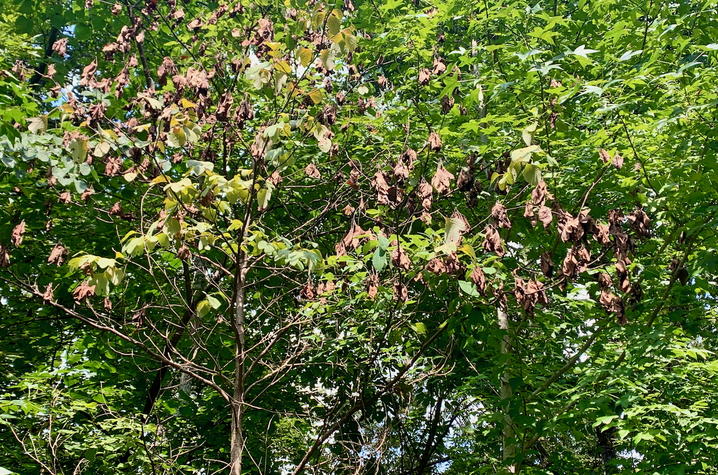
A fungus that causes laurel wilt can kill a sassafras tree in just a few weeks, and it’s a disease threatening sassafras in Kentucky and other members of the laurel family across the nation. Researchers at the University of Kentucky Martin-Gatton College of Agriculture, Food and Environment (CAFE) are studying whether the fungus’ own natural defenses could be used to stop it.
The research focuses on RNA interference (RNAi), a process that uses specially designed pieces of double-stranded RNA to silence genes essential for a pest or pathogen’s survival. Unlike traditional treatments that may affect many organisms, RNAi can be tailored to target a single invasive species.
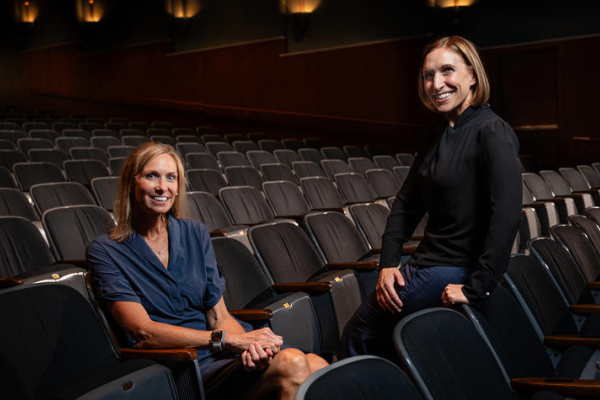
“It’s like attacking a computer hacker with their own antivirus software,” said Ellen Crocker, Ph.D., associate professor of forest health extension in the UK Department of Forestry and Natural Resources. “You’re turning that system against itself.”
Many organisms — including plants, animals, insects and fungi — naturally recognize double-stranded RNA as a sign of viral infection. When detected, the organisms break the pathogens into smaller pieces and search for matching genetic instructions within their cells.
Experts in Martin-Gatton CAFE aim to harness this response by introducing RNA that matches a pathogen’s own genes. The fungus would begin destroying the genetic instructions it needs for basic functions such as growth, nutrient processing and reproduction.
“The idea is to choose gene sequences that are only in the fungus we want to target,” said Josh Konkol, Ph.D., a UK postdoctoral researcher on the project. “Ideally, you could apply it around other fungi and organisms, and the only one affected would be the pathogen carrying that matching sequence.”
This level of precision could offer a major advantage over conventional fungicides, which often hurt beneficial fungi along with harmful ones. RNAi treatments can also be developed using the genome of a target organism and applied externally, meaning they do not require genetically modified trees.
Once a tree is infected, treatment options are limited. Some fungicides may offer temporary protection for individual trees, but they are costly, requiring repeated applications that are not practical for widespread forest use.
“For sassafras, the future situation is pretty bleak if we don’t have better tools,” Crocker said. “The exciting part of RNAi is the possibility of making something extremely targeted to the fungus we want to stop without harming everything else around it.”
Laurel wilt is one of several threats included in the broader research effort. The team is also exploring RNAi approaches for chestnut blight, Dutch elm disease, butternut canker, emerald ash borer and invasive adelgids.
The project is supported by a $411,000 cooperative agreement with the US. Department of Agriculture Forest Service. Crocker and Konkol are collaborating with Tyler Dreaden, Ph.D., a research plant pathologist with the Forest Service Southern Research Station and a member of UK’s Forest Health Research and Education Center.
Crocker said the partnership brings together university research, forest service expertise and ongoing work on invasive species.
“These are difficult invasive species, and we need more options,” she said. “RNAi could become another tool in the toolbox, but first we have to understand what works, what doesn’t and how to deliver it in a way that can actually protect a tree.”
This material is based upon work that is supported by the Forest Service of the U.S. Department of Agriculture, under cooperative agreement 24JV11330101060. Any opinions, findings, conclusions or recommendations expressed in this publication are those of the author(s) and do not necessarily reflect the view of the US. Department of Agriculture.