Fighting childhood obesity: UK researchers study semaglutide with adolescents

Kentucky has one of the highest childhood obesity rates in the country, and the health consequences carry forward throughout life. That’s one of the reasons researchers at the University of Kentucky are leading a groundbreaking clinical trial to determine if medical intervention can reverse the early signs of heart disease in children struggling with severe obesity.
The MODERN study (Mitigation of Cardiovascular Disease Risks in Pediatric Extreme Obesity) is specifically designed to address a growing health crisis in the Commonwealth, and its results could have profound implications for the state’s public health policy and the long-term well-being of its youngest residents.
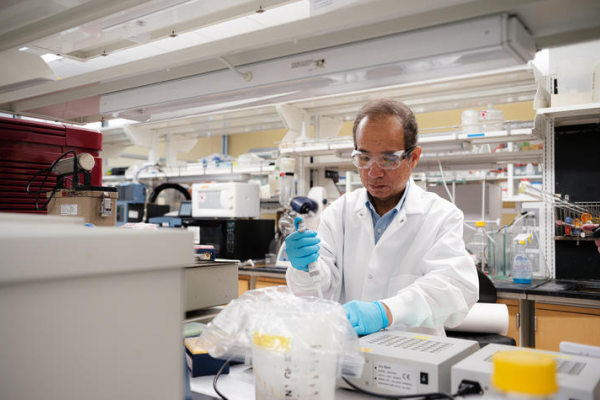
Led by John Bauer, Ph.D., vice chair of research and a professor of pediatrics in the UK College of Medicine, and Aurelia Radulescu, M.D., an associate professor of pediatrics in the College of Medicine and medical director of the UK Pediatric BMI Clinic within Golisano Children’s at UK, the study examines how the medication semaglutide, a GLP-1 receptor agonist, impacts the cardiometabolic risk status of adolescents. Although semaglutide — better known by its brand names Ozempic and Wegovy — has gained national attention for its role in adult weight management, the UK team is looking specifically at its ability to mitigate the physical damage obesity causes to a developing heart.
Founded by Radulescu, the UK Pediatric BMI Clinic has served the medical needs of children with obesity since 2008. The clinic receives referrals from across the state — as many as 1,000 new patients annually.
“The Pediatric BMI Clinic serves as a medical home that provides screening of the plethora of diseases and conditions that are known to be promoted by obesity in children,” Bauer said. “The clinic is run out of General Pediatrics and also serves as a management center for patients to receive other specialty care, including cardiology.”
It’s the only clinic of its kind in the Commonwealth, and lately, there has been a large increase in patient referrals, which reflects the size of the problem in Kentucky and the increased visibility of solutions.
Safety first
Semaglutide has already been proven safe and effective for children ages 12-18, receiving FDA approval in 2022, but it does have known side effects. That’s why the team provides extensive family education and support along with low-dose use of the drug and monthly outcome monitoring. The clinic now serves more than 140 patients receiving pharmacological weight loss management.
“The decision to initiate treatment should involve shared discussions with the family,” said Radulesco. “It’s crucial to thoroughly communicate the risks and benefits and to conduct appropriate screenings before prescribing these medications. GLP-1 medications should be prescribed only when clinically necessary, not for cosmetic reasons.”
The results are promising, but the team remains diligent regarding safety. GLP-1 medications have been used in adults for more than 10 years, but since they were only approved for pediatric use by the FDA in 2022, the data on the long-term effects remains limited.
Although initial headlines about GLP-1 medications often focused on potential links to cancer, long-term clinical trials with adults have largely dispelled concerns that these medications increase the risk of acute pancreatitis or pancreatic cancer.
The discussion around thyroid cancer is more specific. Early animal studies showed an increased risk of medullary thyroid carcinoma in rodents, but human thyroid biology is significantly different. Healthy human C-cells — the cells where this specific cancer originates — contain almost no GLP-1 receptors, which explains why the mechanism seen in mice has not been easily replicated in humans.
Although some recent human observational data has suggested a potential elevated risk for thyroid cancer, other large-scale studies have found no association. Out of an abundance of caution, UK HealthCare maintains rigorous protocols for the MODERN study.
“We are very cautious and perform thorough screenings before prescribing these medications,” Radulescu said. “This process involves excluding any patients with a personal or family history of medullary thyroid carcinoma or multiple endocrine neoplasia type 2.”
“The known, severe health risks of untreated childhood obesity must be balanced against the very low incidence of serious side effects,” Bauer said. “By managing these medications within a specialized clinical setting, we can ensure that young patients in Kentucky receive the safest, most effective care possible.”
At the heart
The prevalence of pediatric obesity in Kentucky is a significant concern for healthcare providers across the state. Children seen at the UK clinic often range from 2 to 18 years old, many referred by primary care providers after developing serious complications. These complications include Type 2 diabetes, hypertension, sleep apnea and metabolic-associated fatty liver disease.
“We now recognize that obesity is a serious condition that drives numerous disease states affecting both children and adults, and it is associated with multiple medical complications,” Radulescu said. "The practice of ‘watchful waiting’ is no longer recommended. Without aggressive and early intervention, these children are likely to enter adulthood with advanced cardiovascular issues."
That’s why one of the primary goals of the MODERN study is to look past the number on a scale and focus on the structure and function of the heart. Research has shown that children with severe obesity often have different cardiac functions and structures compared to their healthy-weight peers. Specifically, these young patients frequently exhibit thicker heart walls and larger chambers, including a larger left atrium and increased left ventricular mass.
These structural changes place young Kentuckians at a high risk for major cardiovascular events as they enter early adulthood. However, diagnosing these changes in children with severe obesity can be difficult using standard methods.
“Getting a clear view on those parameters with an echocardiogram can be difficult because the body habitus of a child with obesity doesn’t have a good acoustic window,” Radulescu said. In other words, it’s hard to get a clear ultrasound picture of the heart because extra body fat makes it difficult for the sound waves to travel through and capture detailed measurements.
To overcome this barrier, the UK researchers are using cardiac MRI and cardiopulmonary exercise tests to obtain a more sophisticated and accurate view of the heart’s health. Participants in the study undergo these tests at the beginning of the trial and again after one year of treatment with semaglutide to measure any reversal in heart disease markers. Several of the measurements made in the MODERN research study are likely to become standard care as more is learned about the best way to identify the most concerning patients.
Stigmas
A core message of the research is reclassifying obesity from a lifestyle choice to a chronic disease. Radulescu explained that although healthy eating and physical activity are essential foundations, they are often insufficient for treating severe obesity.
“Obesity is a disease, not a personal choice,” Radulescu said. “Like any other disease, it requires proper treatment, and simply waiting to see if it improves is no longer an acceptable approach.”
She explains that many patients have a biological “set point” that predisposes them to accumulate fat, making it nearly impossible to maintain significant weight loss through lifestyle changes alone.
By treating the disease early and effectively, the hope is to reset this point, though researchers admit that long-term data is still being collected to see if these effects can be permanent.
Heart to head
Beyond the physical data, the study is observing significant psychological improvements in its teenage participants. Adolescents with severe obesity often face extreme discouragement when lifestyle modifications fail to produce results, which can lead to low self-esteem and social isolation.
When medical treatment is introduced and patients begin to see tangible progress, researchers have noted a shift in their mental health. Parents involved in the study have reported that their children are more motivated, confident and more likely to engage in social interactions.
This demonstrates the potential for medical intervention to do more than save lives — it could improve them too.
“It makes me feel better, and not just physically. I feel better about myself. It has been wonderful,” said one teenage participant, who was kept anonymous due to the sensitive nature of the study. “I can run, I can do other things. I’ve lost 40 pounds. And now I don’t get fatigued because of the weight. I would recommend it.”
The participant’s parent agreed: “He’s doing really well with it. It’s been very much healthy, just two to three to four pounds a month. I worried about side effects going into it. But luckily, outside of some nausea, he’s been totally fine.”
The participant spoke about the nausea when asked: “I would say it’s minor or inconvenient. When it happens, it’s just a wave, and then it passes.”
What’s next
A significant hurdle for families in Kentucky is the cost of these life-changing medications. Currently, most insurance plans in the state, including Kentucky Medicaid, do not cover the cost of obesity medications like semaglutide. Several other states have already expanded their Medicaid programs to include these treatments. The MODERN study aims to demonstrate the value of these treatments and support their wider availability for Kentuckians who need them.
“If our study can demonstrate that medications like semaglutide not only help treat obesity but also reduce cardiovascular risk factors, insurers may be more willing to expand coverage for these drugs,” Radulescu said.
The MODERN study is supported by a UK EXCEL Research Initiative award, the Regina Drury Pediatric Research Endowment Fund and the Department of Pediatrics Golisano Research Initiative.
The trial’s clinical research infrastructure and pediatric research team are led by Bauer, who oversees the study’s internal funding and the operational management of the project and derived data. As a pilot study, it is intended to set the stage for larger, more comprehensive trials that will continue to monitor the health of Kentucky's children over several years. This project is one of several that Bauer’s team has developed to align research projects to improve and enhance pediatric patient care.
The ultimate goal is to ensure a better future for the next generation of Kentuckians.
“If we want our children to grow into healthy adults, we must address and treat obesity early and effectively,” Radulescu said.