Wayne T. Sanderson: 2026-27 University Research Professor Q&A
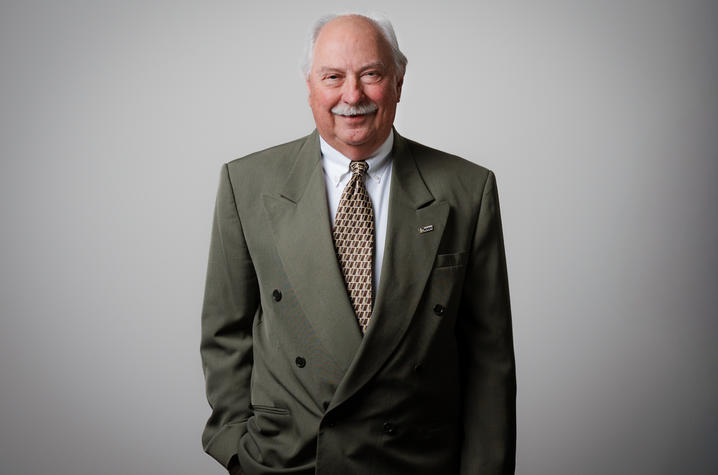
Wayne T. Sanderson, Ph.D., a professor in the Martin-Gatton College of Agriculture, Food and Environment Department of Biosystems and Agricultural Engineering, has been honored as a 2026-27 University Research Professor.
Sanderson is the founding director of the Central Appalachian Regional Education Research Center and the director of the Southeast Center for Agricultural Health and Injury Prevention. Combined, these two centers bring more than $3 million per year to UK for research and student training.
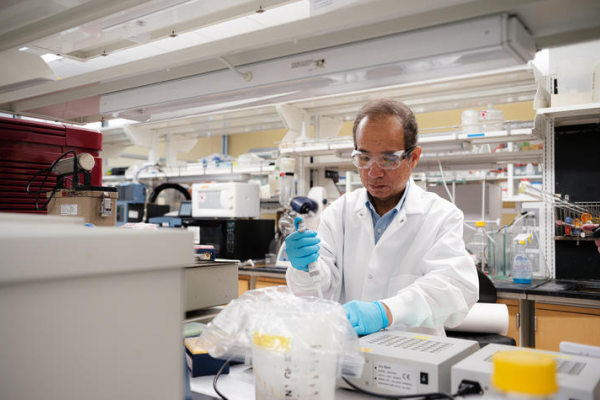
He conducts research on respiratory diseases, cancer, infectious diseases, injuries, chronic diseases and adverse birth outcomes associated with a wide variety of occupational and environmental exposures. His students undertake research on topics encompassing epidemiology, exposure assessment and risk evaluation.
Before coming to UK in 2009, Sanderson was a professor of occupational and environmental health in the University of Iowa College of Public Health where he directed the Industrial Hygiene Training Program and the Great Plains Center for Agricultural Health. From 1978 to 2002, he was a U.S. Public Health Service Commissioned Corps officer for the National Institute for Occupational Safety and Health (NIOSH), which culminated with his position as chief of the Industrial Hygiene Section in the Industrywide Studies Branch.
Sanderson has served in many leadership and coordination roles in both the Centers for Disease Control and Prevention (CDC) and academia, including chair of the UK Department of Epidemiology and the interim dean of the College of Public Health.
He spoke with UKNow about his latest honor as a University Research Professor in this Q&A.
UKNow: What does it mean to you to be recognized as a University Research Professor?
Sanderson: When I consider the amazing research that is being conducted at UK in so many different areas, it is really quite humbling to be considered among this cohort of University Research Professors. I have never considered myself to be a top researcher, but someone who is part of an exemplary team of researchers. Perhaps I am occasionally the leader of the team or come up with some insightful, useful ideas, but it is the team that makes our work a success and not so much any individual contribution by me. Yes, “humbling” is the word I would use to describe this recognition.
UKNow: How will the professorships program advance your research?
Sanderson: In my field, these are particularly tumultuous times for research funding. Most of our current funding comes from NIOSH within the CDC. A year ago, we thought we were losing all of our funding and would need to close our training and research centers. Then miraculously, our funding was restored by September, and now we are actually well-funded. However, it is a constant struggle to keep things going. I plan to use this program to help showcase the great work our students, staff and faculty are doing, noting its impact on health and safety.
UKNow: What inspired your focus on this area of research?
Sanderson: As long as the work involves studying hazards associated with occupational or environmental exposures and how to prevent injuries and diseases caused by them, then we are “focused” on that. But that means we are studying causes and how to prevent traumatic injuries and fatalities, infectious and vector-borne diseases, cancers, respiratory diseases, birth defects and adverse birth outcomes, autism, pediatric hypertension, suicide and depression prevention and on and on. We are also working in the area of One Health research to include studying animal injuries and diseases and how the environment impacts them. Our work is very broad indeed, which makes the day varied and exciting.
UKNow: What continues to motivate your work?
Sanderson: That is a very easy question to answer — being in a university environment, working with bright young people who will be the next generation of teachers and researchers. Nothing excites me more than seeing the light in the faces of our students when they finally grasp some difficult concept, make a new discovery or realize their ability to significantly contribute to our field. I could have continued to work for NIOSH or some other research institute, but then I would have missed the academic life. I believe that with some recent retirements, I am now the oldest professor in our department. I still bound out of bed each morning — although more slowly than I used to — and cannot wait to get to work, especially on days when I get to lecture and work with students on their research.
UKNow: How does your research impact Kentucky?
Sanderson: That is a question we are frequently asked, but which is difficult to answer. We will never really know how many occupational and environmental injuries and diseases our work may have prevented. However, I like to think that there are many people alive and well today because of the work we have done to educate them about hazards or provide interventions that reduce their risks. Surveillance data of these injuries and diseases indicates that we may have had some impact, however, it also shows that there is still much more work to do and that new hazards are emerging all the time. Hence, the great need for that next generation I was talking about.
About the University Research Professors
Each year, the University of Kentucky Board of Trustees approves a cohort of faculty as University Research Professors. The distinction recognizes excellence in work that addresses scientific, social, cultural and economic challenges in Kentucky and the world.
College leadership developed criteria for excellence within their area of expertise and then nominated faculty who excelled at these criteria. Each University Research Professor receives a one-year award of $10,000.